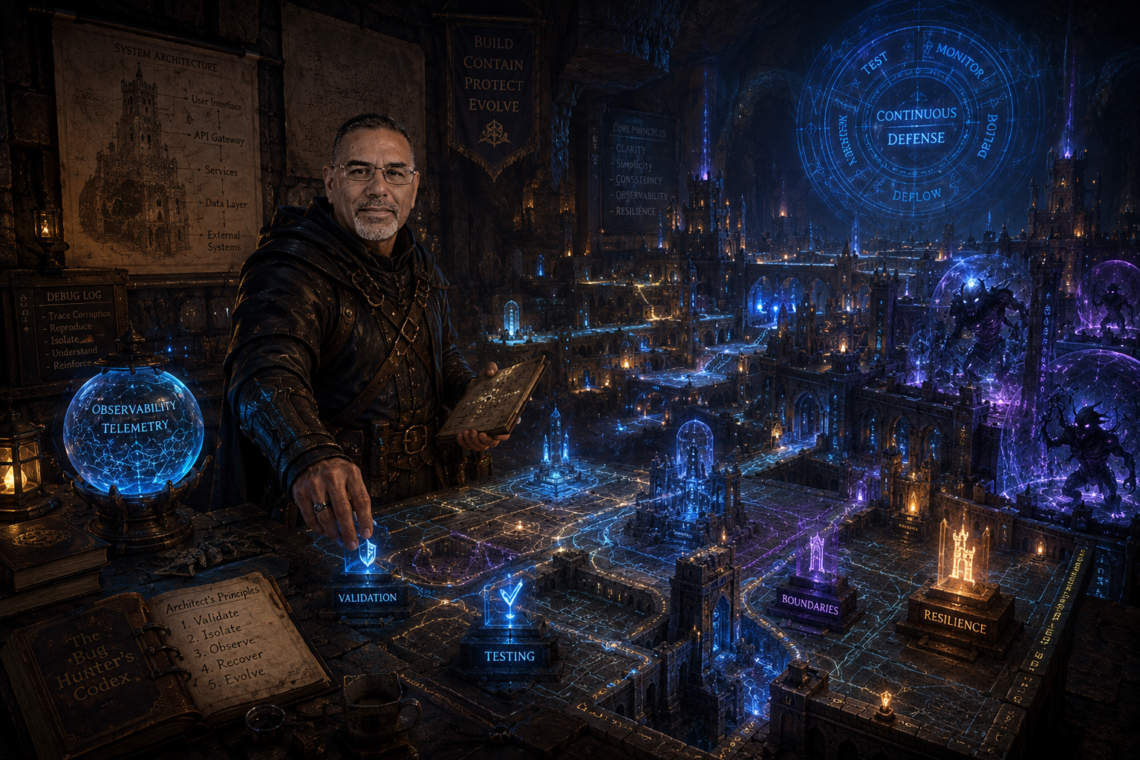
• Cinematic D&D-inspired digital artwork featuring Frank Jamison as a seasoned bug hunter turned master architect-engineer standing inside a vast underground guild fortress. Wearing practical dark adventuring gear, Frank stands over a massive glowing stone planning platform, placing luminous architectural runes into an intricate magical fortress under construction. Around him are glowing ward systems representing validation and testing, magical roadways symbolizing software boundaries, floating diagrams, observability crystals projecting system maps, and shadowy corrupted creatures trapped behind reinforced magical barriers. Ancient stone walls, enchanted blueprints, debugging notes, and layered defenses create a thoughtful mentor-like atmosphere illuminated by deep blue, violet, ember, and gold light, with dark negative space framing the right side of the scene.
    Full Stack Mastery

    The Bug Hunter’s Codex, Part XII: The Hunter Becomes the Architect

    When you no longer chase monsters… because you build worlds where they struggle to survive. For a long time, I believed bug hunting was the highest calling of a software engineer. I believed the craft was found in late nights spent following broken traces through failing systems, in learning how corrupted state moved silently between components, and in developing the instincts necessary to recognize when something subtle had gone wrong. The work mattered. Every engineer who has survived production failures knows this truth well. Yet over the years, I learned something that changed how I viewed the profession. The strongest engineers eventually spend less time hunting monsters because they become…

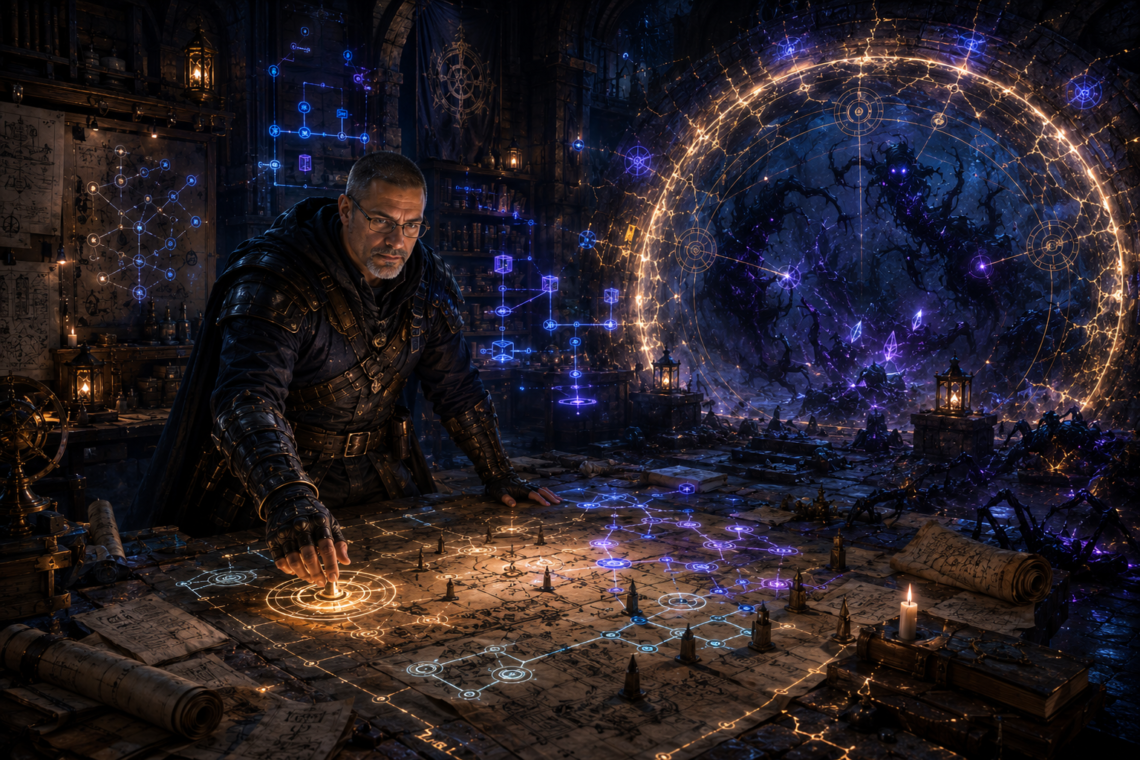
  • Cinematic D&D-inspired fantasy scene featuring Frank Jamison as a seasoned bug hunter and veteran engineer inside an ancient underground command chamber. Frank stands in dark adventuring gear over a massive glowing stone war table covered in illuminated maps, architectural diagrams, scrolls, and rune-like symbols resembling software systems, tests, and monitoring pathways. He carefully activates glowing magical wards while reinforcing a fractured containment barrier trapping shadowy corrupted creatures in the background. The chamber blends a wizard’s sanctum and incident-response war room, filled with lanterns, tomes, magical instrumentation, and faint mist. Deep blue, violet, ember, and golden lighting create a mood of vigilance and recovery after battle, symbolizing software protection and preventing bugs from returning.
    Debugging & Problem Solving

    The Bug Hunter’s Codex, Part XI: Warding the System

    Runes of protection: tests, structure, and clarity that keep corruption from returning. By the time a team reaches the stage I call Slaying the Unnatural, the work has changed from chasing noise to preserving order. A bug may have been found, understood, reproduced, and removed, but that does not mean the system is safe. Many younger engineers learn this the hard way because they think the hunt ends when the failing line is corrected. I have learned to treat that moment as the turning of the key in a dungeon door, not the return to daylight. The creature may be dead, but the chamber that summoned it still deserves inspection.…

  • Frank Jamison, dressed as a Dungeons and Dragons inspired bug hunter, investigates a mysterious Heisenbug inside a dark dungeon corridor. Wearing a weathered cloak and leather adventurer gear, he holds a glowing lantern in one hand and a magnifying glass in the other with a focused, suspicious expression, as if tracking an unseen threat. Around him are maps marked with timing windows, coding clues, bug hunting notes, dice, ancient books, and a laptop displaying cryptic logs and intermittent system failures. Torches flicker against stone walls while symbols and warnings about the elusive Heisenbug reinforce the theme of investigative debugging and dungeon crawling.
    Debugging & Problem Solving

    The Bug Hunter’s Codex, Part VI: The Heisenbug

    The unseen creature – vanishing under scrutiny, leaving only doubt and frustration in its wake. There comes a point in every hunter’s life when skill alone no longer feels sufficient. You have learned to read omens in logs, recognize unnatural behavior, trust your instincts, reproduce the beast, and bind the conditions that summon corruption into the world. Your confidence grows with every victory until, eventually, you encounter something that refuses to obey the rules. That creature waits in silence, hidden in the spaces between certainty and confusion, mocking every lesson that once served you well. I speak of the Heisenbug. If you have never encountered one, then your time has…

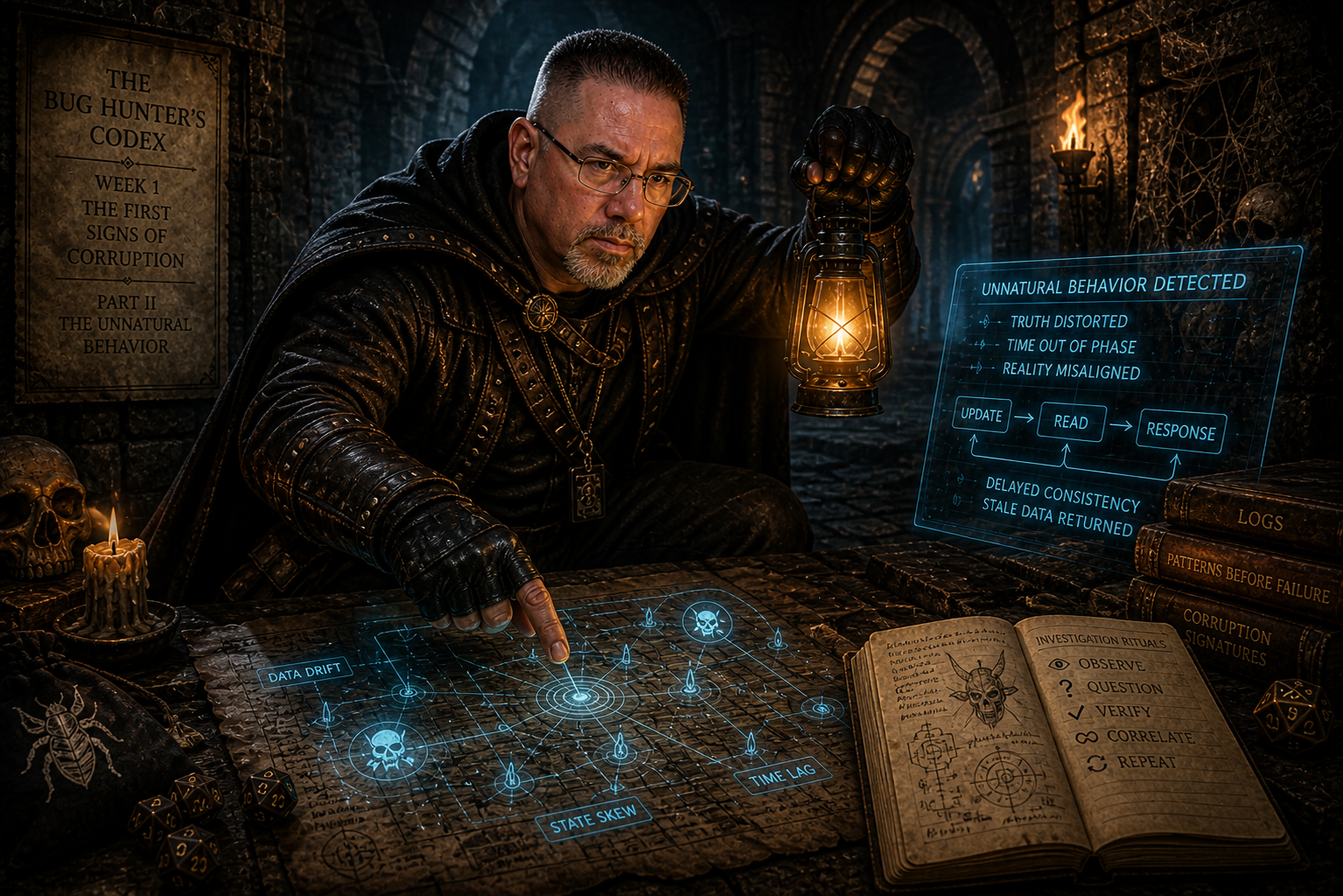
  • Frank Jamison, portrayed as a D&D-inspired bug hunter, crouches in a dimly lit dungeon while holding a lantern and studying a glowing, arcane-style data map on a stone table. His expression is focused and intense as he investigates signs of corrupted system behavior, surrounded by ancient runes, books, dice, and hybrid magical-technical elements that symbolize debugging and hidden system anomalies.
    Backend Architecture

    The Bug Hunter’s Codex, Part II: The Unnatural Behavior

    When the world bends but does not break, you are already standing inside the problem. Week 1 is never about the obvious monsters. It is about the subtle distortions that creep into the edges of the system before anything truly breaks. In Part I, I learned to read the omens in the logs. Here, the hunt deepens. I am not just reading signs anymore. I am stepping into the territory where the world itself begins to shift. The system still stands. It still answers. It still breathes. But something is wrong in a way that cannot be proven at a glance. This is where most hunters turn back. This is…

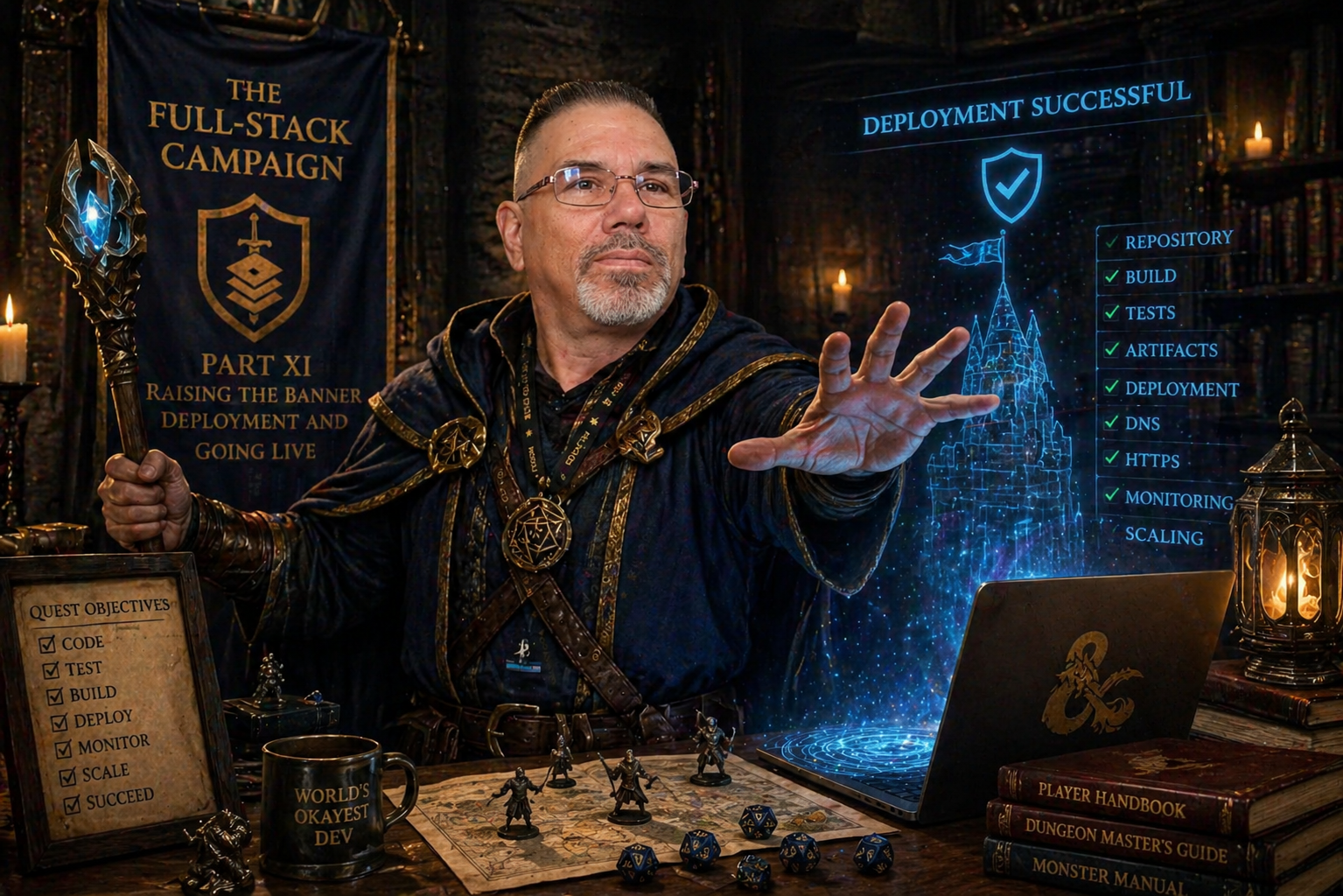
  • Frank Jamison stands in a dim, fantasy-inspired study dressed as a mage-like commander in a dark blue and gold-trimmed robe, reaching forward with a focused expression as if casting a spell. A glowing holographic display beside him reads Deployment Successful with a checklist including repository, build, tests, artifacts, deployment, DNS, HTTPS, monitoring, and scaling. Behind him, a banner reads The Full-Stack Campaign Part XI Raising the Banner Deployment and Going Live. The desk in front of him holds a laptop with a dragon emblem, a map with miniature figures and dice, a mug labeled World’s Okayest Dev, and stacked Dungeons and Dragons books, blending software deployment themes with a D and D setting.
    Web Development Fundamentals

    The Full-Stack Campaign, Part XI: Raising the Banner – Deployment and Going Live

    There is a moment in every campaign when preparation ends and reality begins. The maps are drawn. The gear is packed. The party stands at the edge of something vast and uncertain. In development, that moment is deployment. It is the instant when carefully crafted code leaves the safety of a local environment and steps into the open world where users, traffic, and unpredictability wait like a restless horizon. I remember the first time I pushed an application live. It felt less like a technical task and more like raising a banner over a fortress I had built stone by stone. Every function, every component, every quiet decision suddenly mattered…