-
The Full-Stack Campaign, Part XII: The Final Boss – Debugging, Maintenance, and Mastery
The battlefield is quiet now. The UI stands. The server answers. The database holds its secrets without complaint. For a brief moment, it feels like the campaign is over, like the quest log has been cleared and the credits should roll. That feeling is a lie, and it is one that catches a lot of developers off guard right when they think they have finally won. The final boss is never the build. It is what comes after. It is the bug that appears only under pressure, the feature that breaks when touched, and the system that slowly drifts away from its original design until no one remembers how it…
-
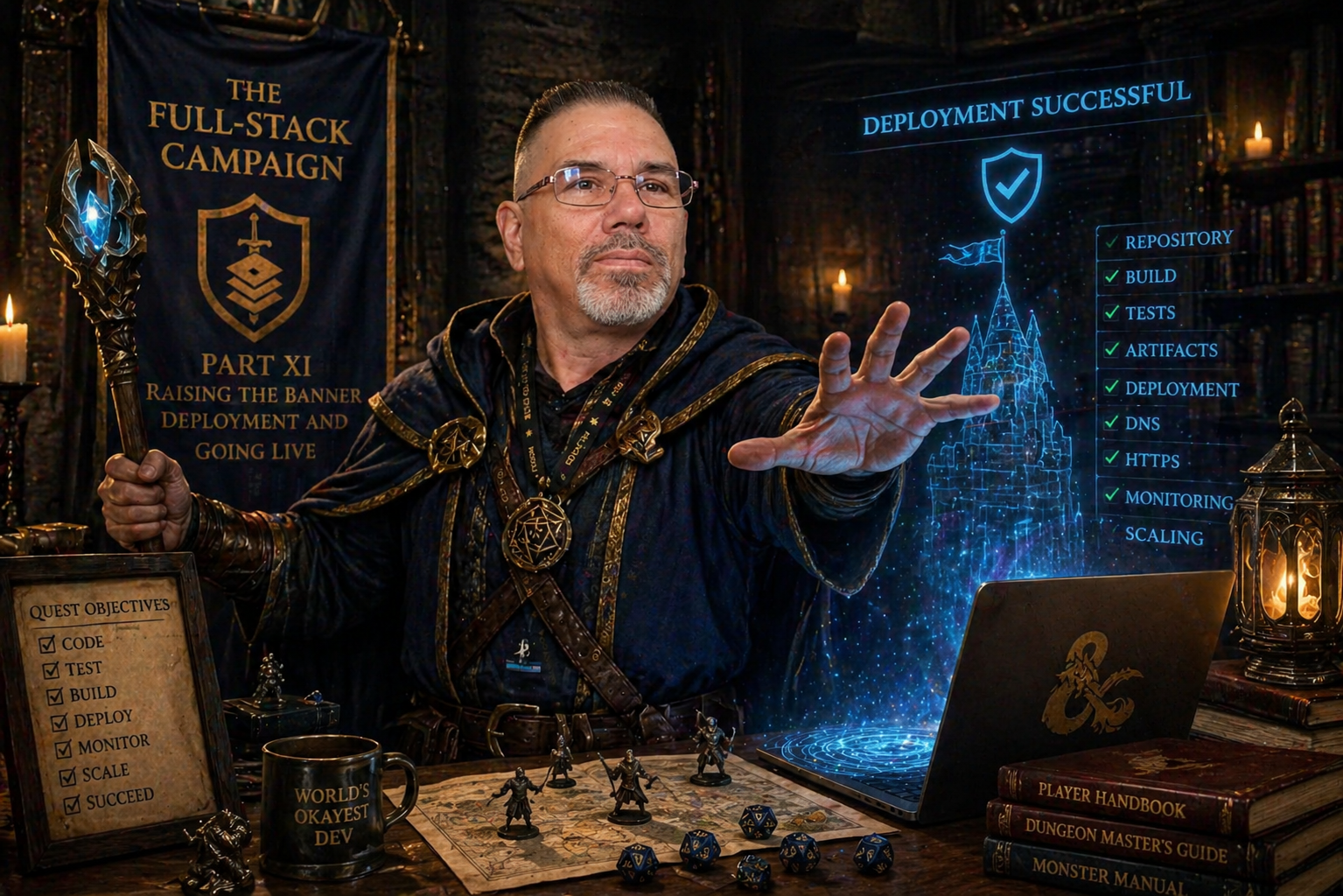
The Full-Stack Campaign, Part XI: Raising the Banner – Deployment and Going Live
There is a moment in every campaign when preparation ends and reality begins. The maps are drawn. The gear is packed. The party stands at the edge of something vast and uncertain. In development, that moment is deployment. It is the instant when carefully crafted code leaves the safety of a local environment and steps into the open world where users, traffic, and unpredictability wait like a restless horizon. I remember the first time I pushed an application live. It felt less like a technical task and more like raising a banner over a fortress I had built stone by stone. Every function, every component, every quiet decision suddenly mattered…
-
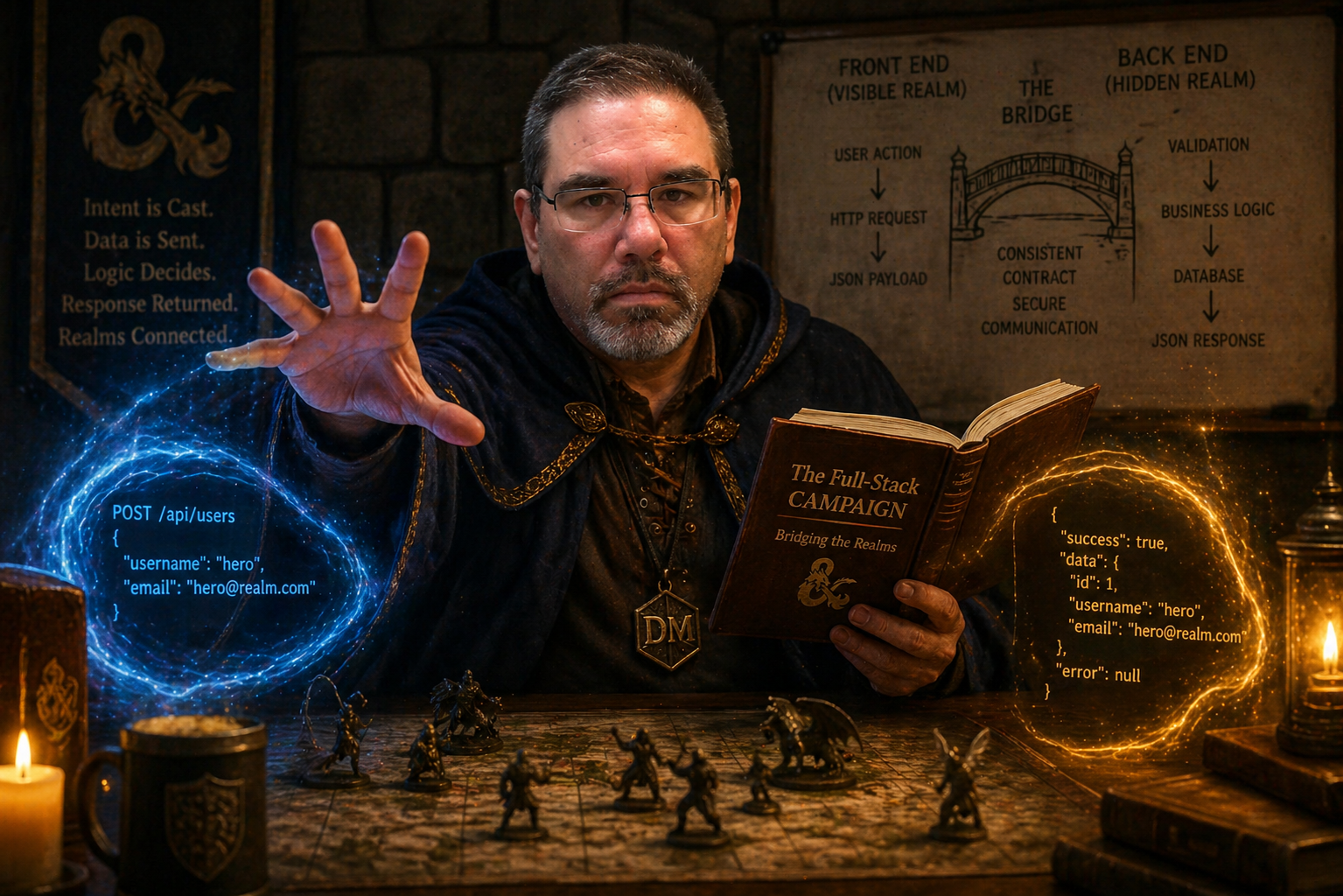
The Full-Stack Campaign, Part X: Bridging the Realms – Connecting Front End and Back End
There is a moment in every build where the illusion collapses. The interface looks complete. The layout holds. The buttons respond. Yet beneath the surface, nothing truly lives. I have stood in that moment before, staring at a polished shell that could not speak to anything beyond itself. It felt like building a castle with no roads leading in or out. Beautiful, isolated, and ultimately useless. That was when I understood that the true craft of full stack development begins at the boundary. Not in the front end alone, and not in the back end alone, but in the space where they meet and learn to speak. The front end…
-
The Full-Stack Campaign, Part IX: The Data Vault – Storing and Shaping Information
I reached the vault long after the torches burned low. Not the kind guarded by dragons or cursed gold, but something quieter and far more dangerous. A place where information slept. A place where every careless decision echoed long after the code was written. Data does not shout when it breaks. It whispers, then waits. Earlier in my journey, I believed the interface was the battlefield. I polished layouts, tuned interactions, and shaped flows until everything felt right. Then I needed memory. A saved state. A record of actions. A history that persisted beyond a single request. That was the moment I realized something uncomfortable. Without a vault, there is…
-
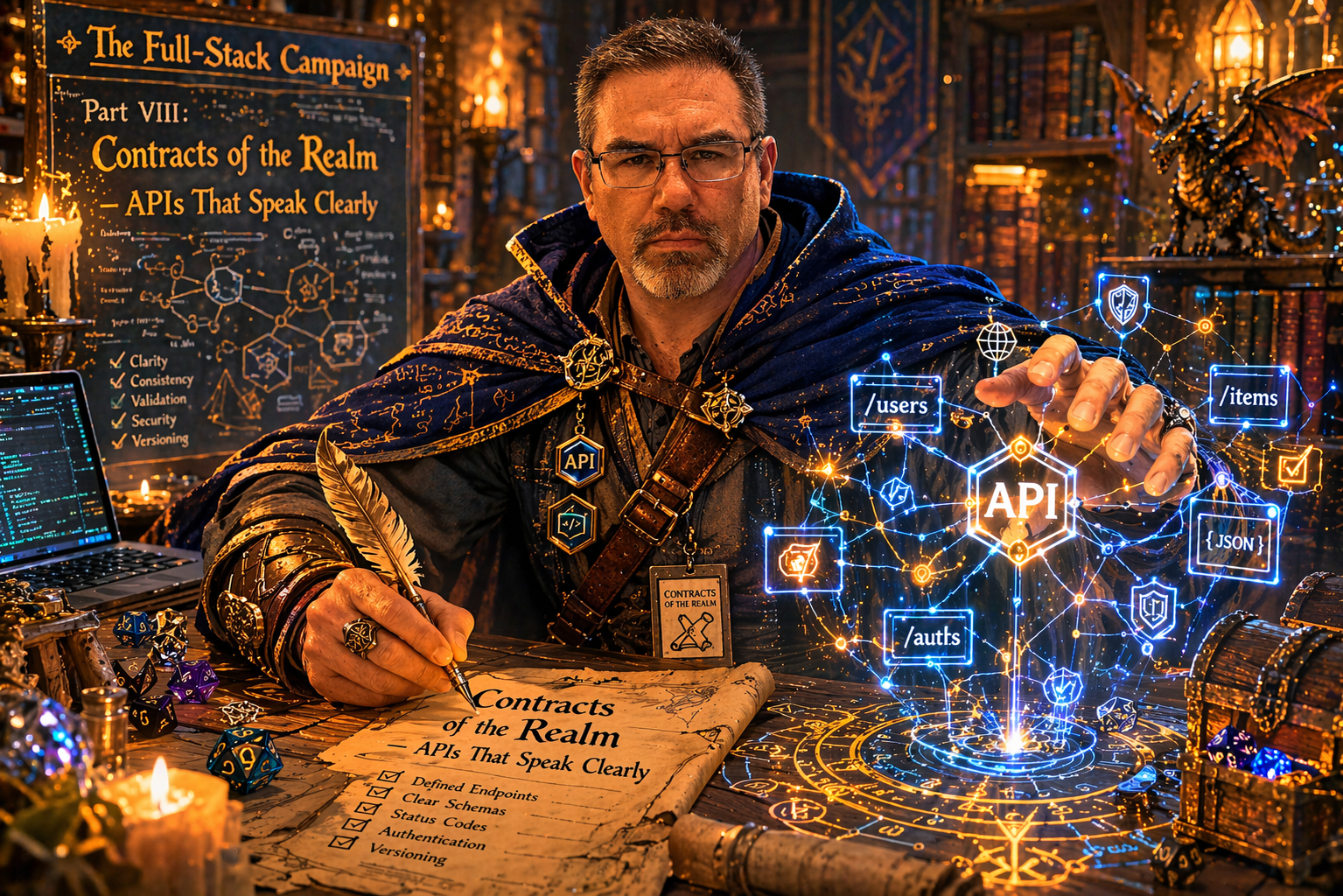
The Full-Stack Campaign, Part VIII: Contracts of the Realm – APIs That Speak Clearly
There is a moment in every campaign when the world stops feeling local. The edges of the map blur, and what lies beyond begins to matter more than what sits directly in front of you. That is where I found myself when I began to understand APIs as something more than endpoints. They are contracts. They are promises carved into the fabric of a system, binding one part of the realm to another with clarity or with chaos. Earlier in this journey, I built what I could see. I shaped structure, controlled layout, and guided behavior. Then I stepped behind the curtain into the server, where requests became intent and…
-
The Full-Stack Campaign, Part VII: The Gate Beyond the UI – What a Server Actually Does
I used to think the browser was the whole world. It felt complete, responsive, almost alive. I would shape the interface, refine the interactions, and watch everything unfold in real time. Then I reached the edge. There was a gate there, quiet and patient, waiting for me to ask a better question. What happens when the browser needs something it cannot create on its own? That is where the server lives. Not as a distant machine humming in the dark, but as a deliberate system that listens, decides, and responds. It is less theatrical than the UI, but far more powerful. If the browser is the adventurer, the server is…
-
The Full-Stack Campaign, Part VI: The Cost of Power – From DOM Manipulation to Design
There is a moment in every developer’s journey where power reveals itself not as a gift, but as a temptation. It usually starts small. A button that needs to change color. A form that should validate before submission. A list that grows and shrinks with user input. At first, the tools feel like magic. You reach into the Document Object Model and bend it to your will. Elements appear, disappear, mutate. The page becomes alive beneath your fingertips. And then, quietly, almost politely, chaos walks in and sits down. I remember the first time I realized I had crossed that line. The code worked. Everything worked. But I could no…
-
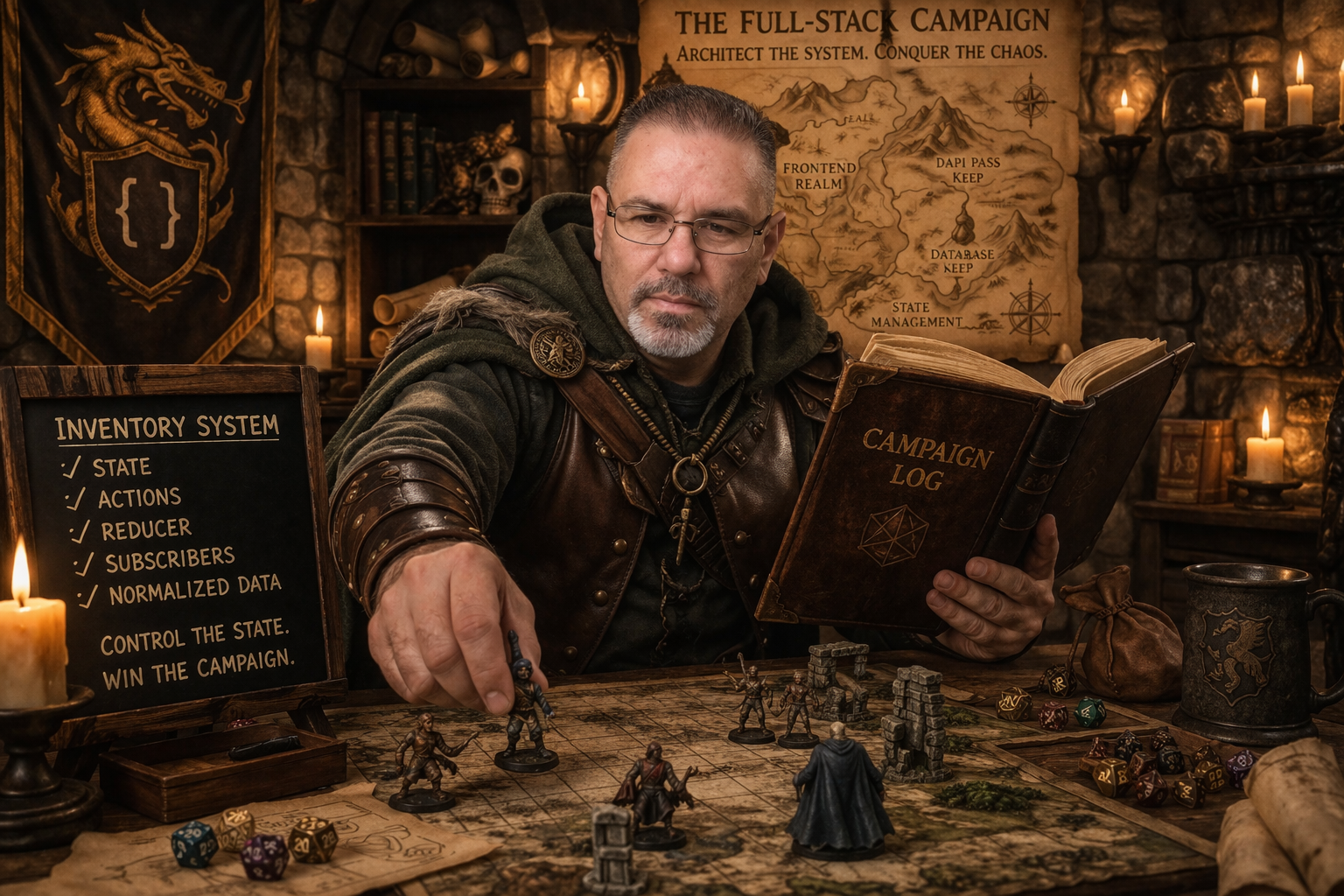
The Full-Stack Campaign, Part V: The Inventory System – Managing State Without Losing Control
Every adventurer learns the same lesson eventually. It is not the sword that fails you. It is not the spellbook that betrays you. It is the moment you reach into your pack and realize you have no idea what is actually inside. That quiet panic is what state management feels like in an application that has grown beyond a simple page. Early on, everything is within reach. A variable here, a function there. The system feels small, predictable, almost polite. Then features arrive. Interactions multiply. Data begins to move. Suddenly the pack is full, and nothing is where it should be. State is the inventory of your application. It is…
-
The Full-Stack Campaign, Part IV: The First Spell – JavaScript and the Flow of Execution
There is a moment in every campaign when the world stops being something you observe and starts becoming something you influence. Up to this point, I had been shaping structure and appearance. The terrain existed. The armor was in place. The realm looked complete, but it did not yet respond. It waited. JavaScript is where that waiting ends. When I first stepped into this part of the stack, I realized something subtle but important. The browser is not just rendering a page. It is executing a sequence of instructions. It reads, evaluates, and moves forward through time. That sense of progression, of one thing happening after another, is the foundation…
-
The Full-Stack Campaign, Part III: Armor and Appearance – CSS Layout Without Chaos
There is a moment in every campaign where survival stops being about raw ability and starts being about preparation. You can swing a sword with perfect form, land every strike, and still fail if your armor shifts at the wrong time or your footing gives out beneath you. That realization hit me the first time I tried to build a real layout with CSS that had to survive outside the safety of my own screen. Structure had already given me a foundation. Semantic HTML had given meaning to the content. But layout was something else entirely. Layout was where everything became visible, where mistakes could not hide, and where fragile…