-
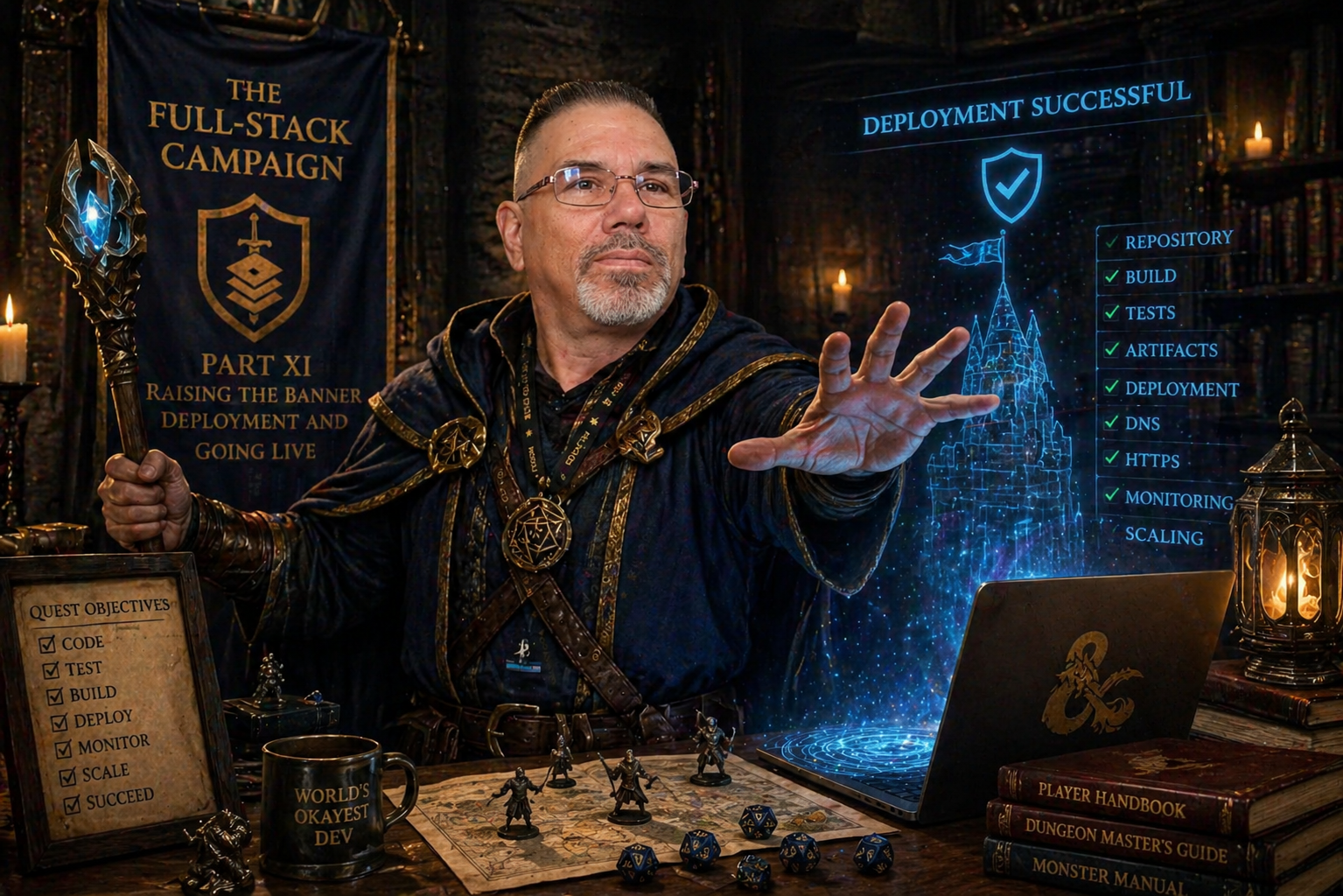
The Full-Stack Campaign, Part XI: Raising the Banner – Deployment and Going Live
There is a moment in every campaign when preparation ends and reality begins. The maps are drawn. The gear is packed. The party stands at the edge of something vast and uncertain. In development, that moment is deployment. It is the instant when carefully crafted code leaves the safety of a local environment and steps into the open world where users, traffic, and unpredictability wait like a restless horizon. I remember the first time I pushed an application live. It felt less like a technical task and more like raising a banner over a fortress I had built stone by stone. Every function, every component, every quiet decision suddenly mattered…
-
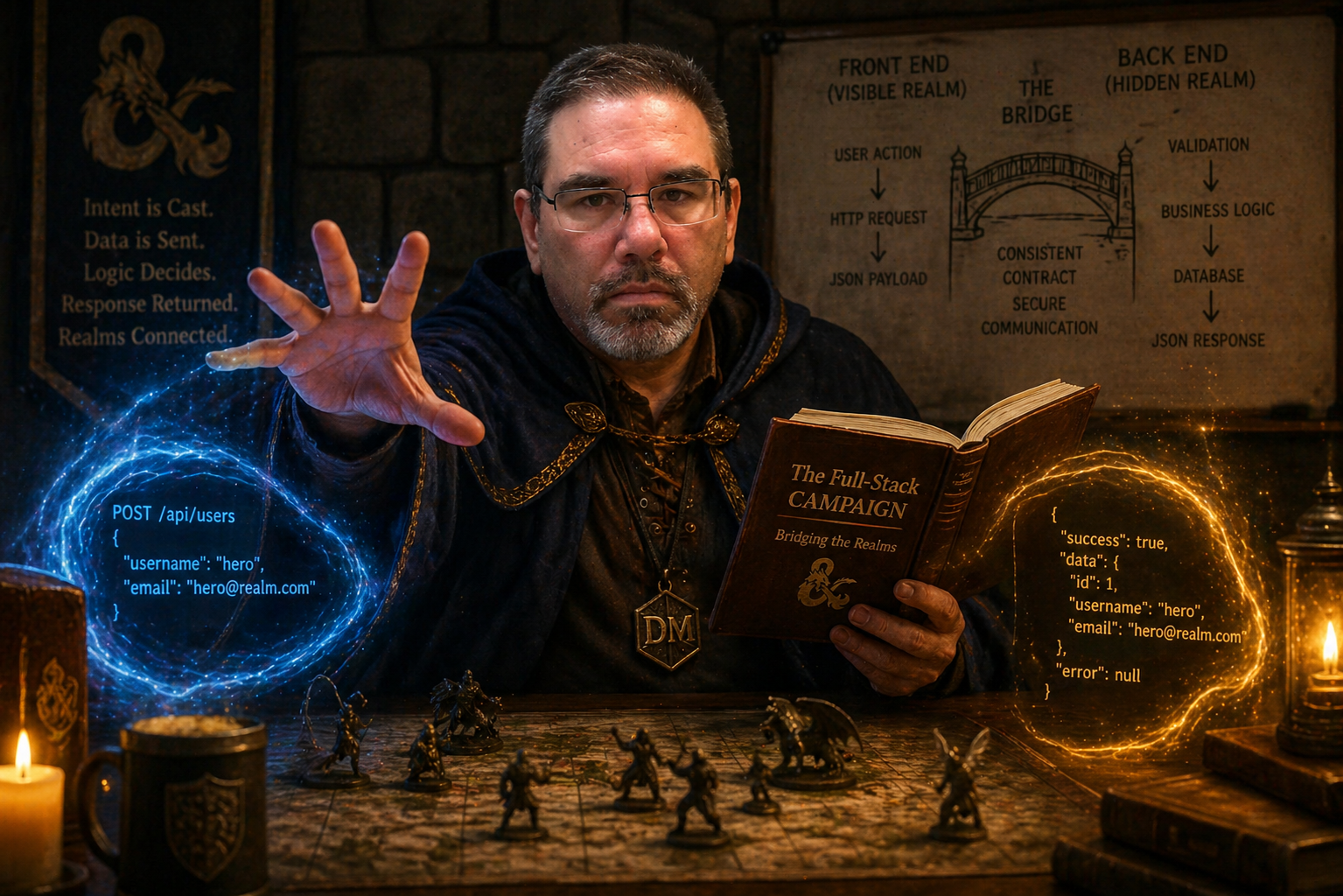
The Full-Stack Campaign, Part X: Bridging the Realms – Connecting Front End and Back End
There is a moment in every build where the illusion collapses. The interface looks complete. The layout holds. The buttons respond. Yet beneath the surface, nothing truly lives. I have stood in that moment before, staring at a polished shell that could not speak to anything beyond itself. It felt like building a castle with no roads leading in or out. Beautiful, isolated, and ultimately useless. That was when I understood that the true craft of full stack development begins at the boundary. Not in the front end alone, and not in the back end alone, but in the space where they meet and learn to speak. The front end…
-
The Full-Stack Campaign, Part IX: The Data Vault – Storing and Shaping Information
I reached the vault long after the torches burned low. Not the kind guarded by dragons or cursed gold, but something quieter and far more dangerous. A place where information slept. A place where every careless decision echoed long after the code was written. Data does not shout when it breaks. It whispers, then waits. Earlier in my journey, I believed the interface was the battlefield. I polished layouts, tuned interactions, and shaped flows until everything felt right. Then I needed memory. A saved state. A record of actions. A history that persisted beyond a single request. That was the moment I realized something uncomfortable. Without a vault, there is…
-
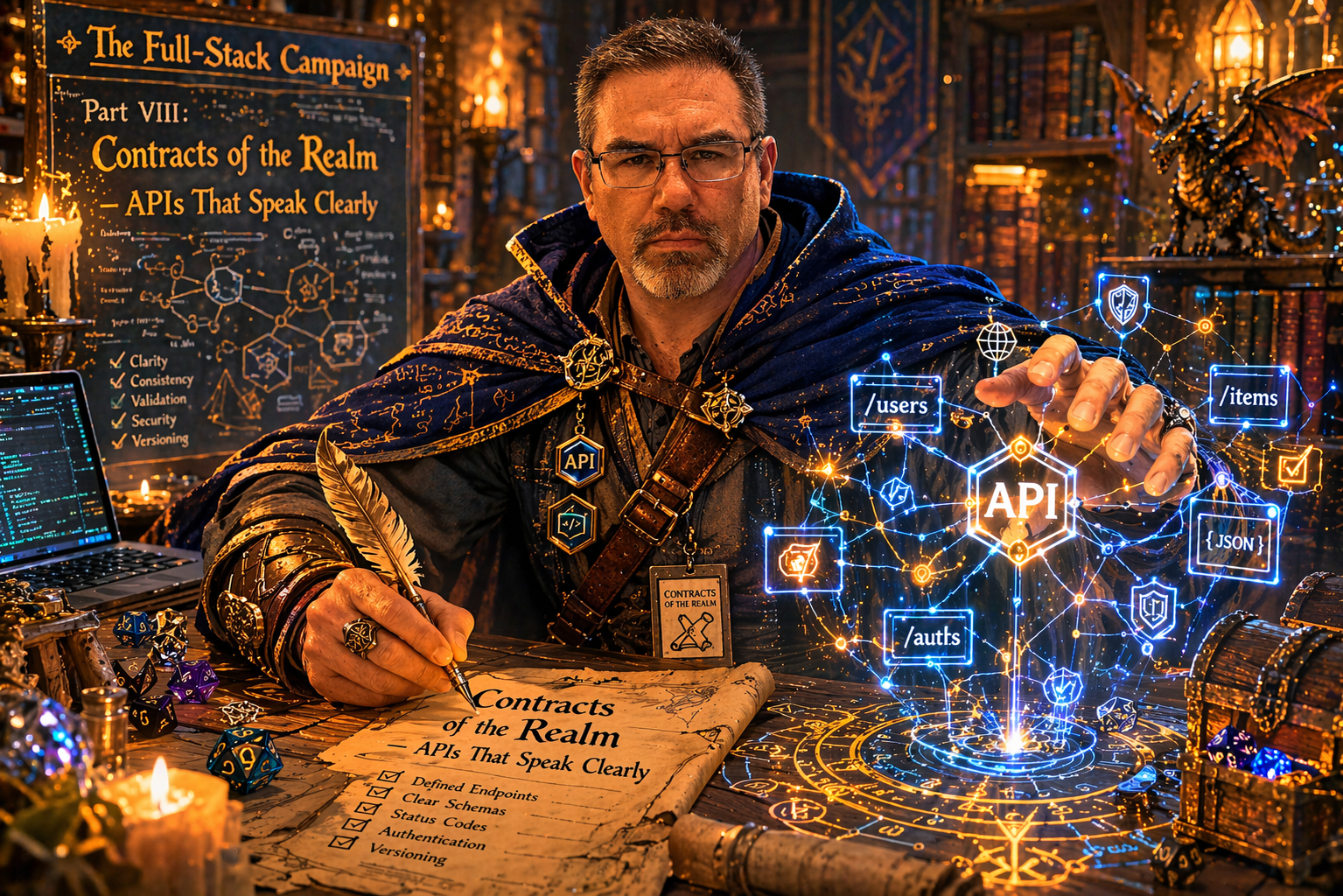
The Full-Stack Campaign, Part VIII: Contracts of the Realm – APIs That Speak Clearly
There is a moment in every campaign when the world stops feeling local. The edges of the map blur, and what lies beyond begins to matter more than what sits directly in front of you. That is where I found myself when I began to understand APIs as something more than endpoints. They are contracts. They are promises carved into the fabric of a system, binding one part of the realm to another with clarity or with chaos. Earlier in this journey, I built what I could see. I shaped structure, controlled layout, and guided behavior. Then I stepped behind the curtain into the server, where requests became intent and…
-
The Full-Stack Campaign, Part VII: The Gate Beyond the UI – What a Server Actually Does
I used to think the browser was the whole world. It felt complete, responsive, almost alive. I would shape the interface, refine the interactions, and watch everything unfold in real time. Then I reached the edge. There was a gate there, quiet and patient, waiting for me to ask a better question. What happens when the browser needs something it cannot create on its own? That is where the server lives. Not as a distant machine humming in the dark, but as a deliberate system that listens, decides, and responds. It is less theatrical than the UI, but far more powerful. If the browser is the adventurer, the server is…
-
Forms, Validation, and Trust: Guarding the Gates of the Digital Realm
When I build a form, I no longer see text inputs and buttons. I see the gates of a city. On one side stands a traveler. On the other side stands my application. Between them is a portcullis made of HTML, guarded by validation rules, warded by server logic, and lit by the flickering torches of user feedback. If I design it poorly, the traveler turns away. If I design it carelessly, something darker slips through. Forms are not paperwork. They are the social contract of the web. They are where trust is negotiated. And in my experience, trust is the most powerful magic in any system. The Gatehouse: Structure…