-
The Bug Hunter’s Codex, Part IX: The False Victory
The silence after the battle is not always peace. Sometimes, the creature still breathes. There is a lesson I wish someone had taught me much earlier in my career, because it would have saved me countless hours of frustration, embarrassment, and self inflicted suffering. Most bug hunters enter the field believing the hardest part of debugging lies in finding the creature. We imagine the struggle begins when alerts scream, users complain, and systems begin behaving like cursed ruins abandoned by wiser travelers. Yet over time, I discovered the true danger often begins after the apparent victory, when exhaustion convinces us to stop asking questions and relief disguises itself as certainty.…
-
The CSS Codex, Part XII: When the Stylesheet Becomes the Monster
I have spent this entire journey studying the laws of the realm, mapping the terrain, refining my tools, and teaching how to shape CSS with intention instead of desperation. I did not start as a master of this system, but I learned early that CSS rewards structure and punishes neglect. What often feels like chaos is usually a system that has been misunderstood or slowly abandoned. There comes a moment in every long campaign when the thing you built to serve you begins to turn. The fortress becomes a labyrinth, the spellbook becomes unreadable, and the stylesheet becomes the monster. I have seen it happen more times than I care…
-
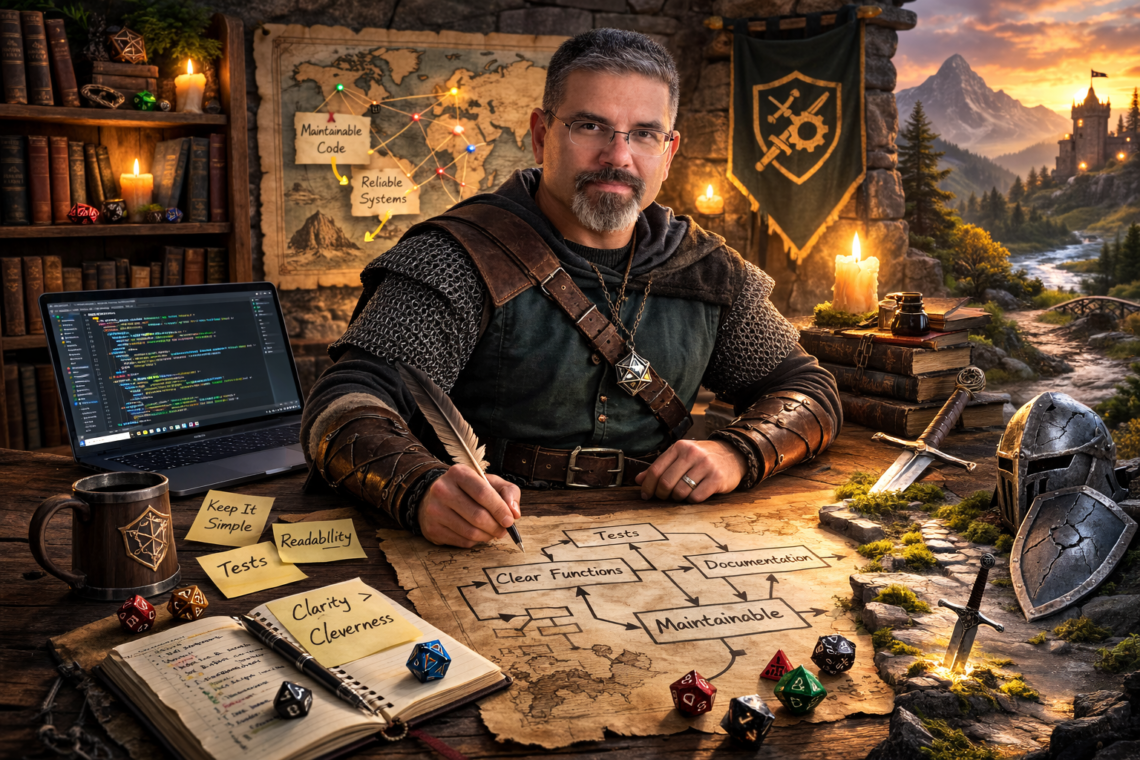
The Case for the Reliable Fighter: Why Boring Code Is Underrated
If you have ever played a long running Dungeons and Dragons campaign, you know that the party rarely falls apart because the fighter showed up in plain armor and swung a dependable sword. The chaos usually starts when someone insists on building a wild multiclass sorcerer bard warlock experiment that only works under a full moon during initiative order. I have learned that software development works the same way. The code that saves projects is rarely flashy. It is steady, readable, predictable. It is, in the best possible way, boring. Early in my development journey, I chased cleverness. I wanted elegant one liners, intricate abstractions, and patterns that made other…