-
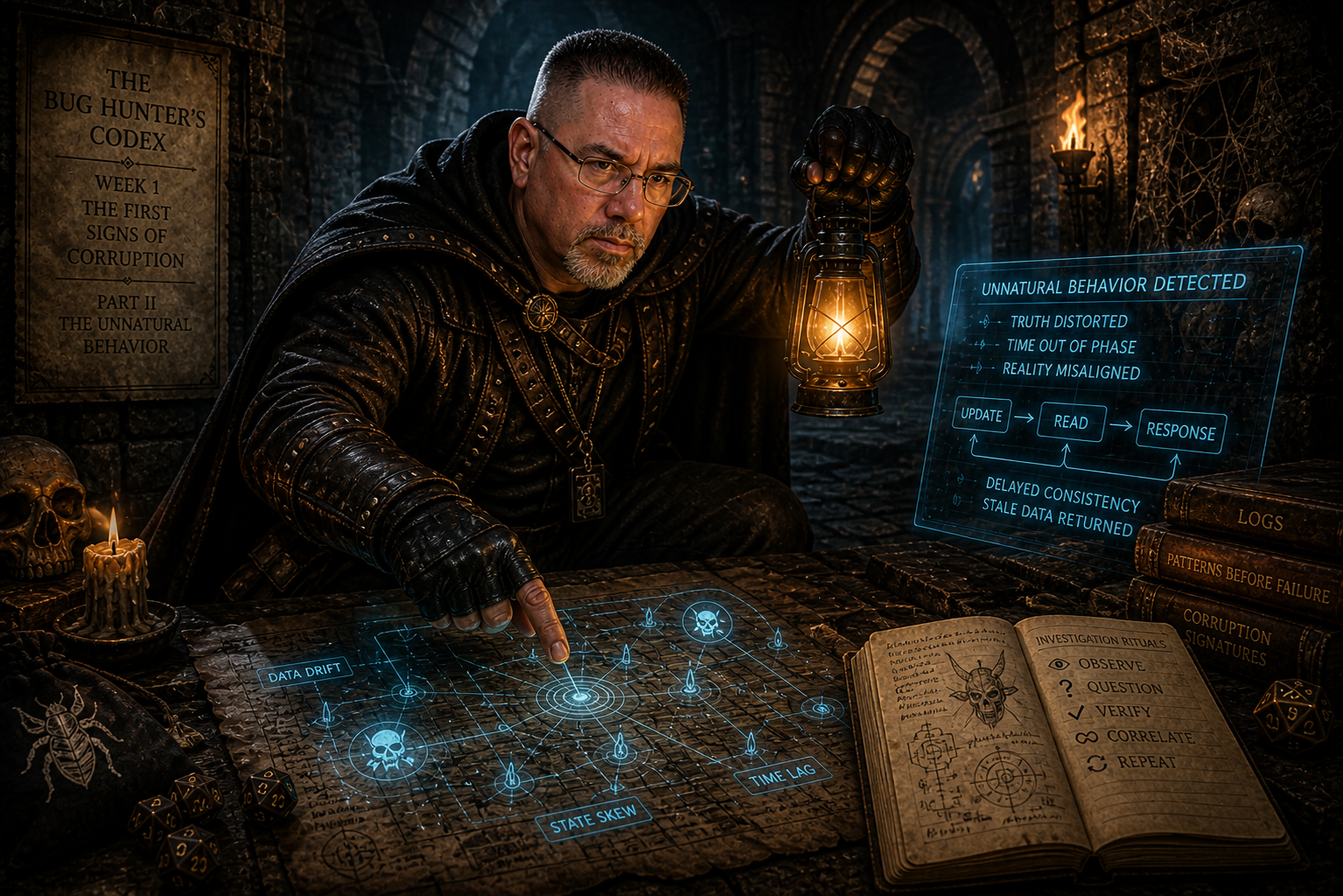
The Bug Hunter’s Codex, Part II: The Unnatural Behavior
When the world bends but does not break, you are already standing inside the problem. Week 1 is never about the obvious monsters. It is about the subtle distortions that creep into the edges of the system before anything truly breaks. In Part I, I learned to read the omens in the logs. Here, the hunt deepens. I am not just reading signs anymore. I am stepping into the territory where the world itself begins to shift. The system still stands. It still answers. It still breathes. But something is wrong in a way that cannot be proven at a glance. This is where most hunters turn back. This is…
-
The Full-Stack Campaign, Part XII: The Final Boss – Debugging, Maintenance, and Mastery
The battlefield is quiet now. The UI stands. The server answers. The database holds its secrets without complaint. For a brief moment, it feels like the campaign is over, like the quest log has been cleared and the credits should roll. That feeling is a lie, and it is one that catches a lot of developers off guard right when they think they have finally won. The final boss is never the build. It is what comes after. It is the bug that appears only under pressure, the feature that breaks when touched, and the system that slowly drifts away from its original design until no one remembers how it…