-
The Bug Hunter’s Codex, Part X: The Killing Blow
Strike at the source. Anything less is mercy, and mercy has consequences. There is a point in every hunt when the lantern is no longer enough. You have followed the tracks, read the claw marks, listened to the villagers describe the shape moving beyond the tree line, and mapped the dungeon room by room until the pattern finally reveals itself. At that moment, the hunter must stop circling the beast and decide where to strike. Debugging reaches that same point when investigation turns into correction, and the difference between a clean kill and a wounded monster is whether you understand the source deeply enough to end it. This week’s theme…
-
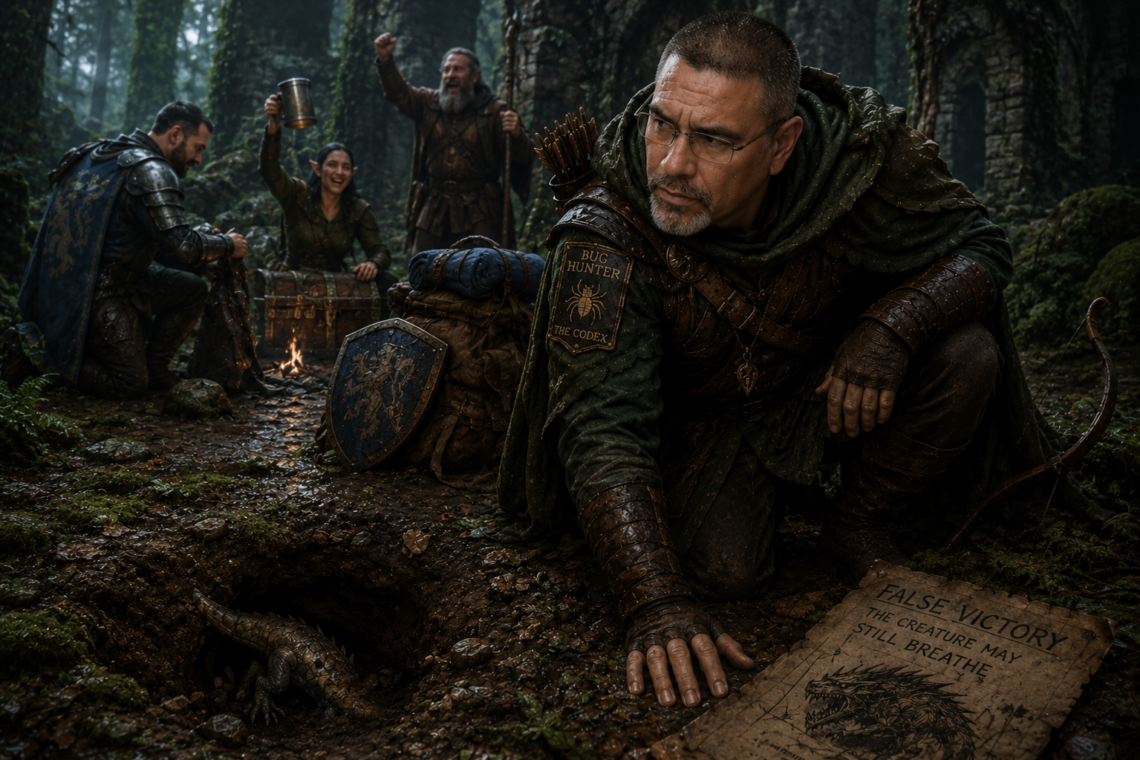
The Bug Hunter’s Codex, Part IX: The False Victory
The silence after the battle is not always peace. Sometimes, the creature still breathes. There is a lesson I wish someone had taught me much earlier in my career, because it would have saved me countless hours of frustration, embarrassment, and self inflicted suffering. Most bug hunters enter the field believing the hardest part of debugging lies in finding the creature. We imagine the struggle begins when alerts scream, users complain, and systems begin behaving like cursed ruins abandoned by wiser travelers. Yet over time, I discovered the true danger often begins after the apparent victory, when exhaustion convinces us to stop asking questions and relief disguises itself as certainty.…
-
The Bug Hunter’s Codex, Part III: The Hunter’s Instinct
Before proof comes suspicion. Before evidence, a feeling that something does not belong. I do not begin this lesson with tools or commands. I begin with a feeling. You have already learned to read the omens in the logs and to recognize when a system behaves in ways that defy expectation without collapsing outright. Those were your first steps into the wild. Now you stand at the edge of something deeper, where the evidence does not announce itself and the danger does not reveal its shape. This is where instinct becomes your most reliable weapon. In every campaign there is a hunter who senses the ambush before the arrow is…