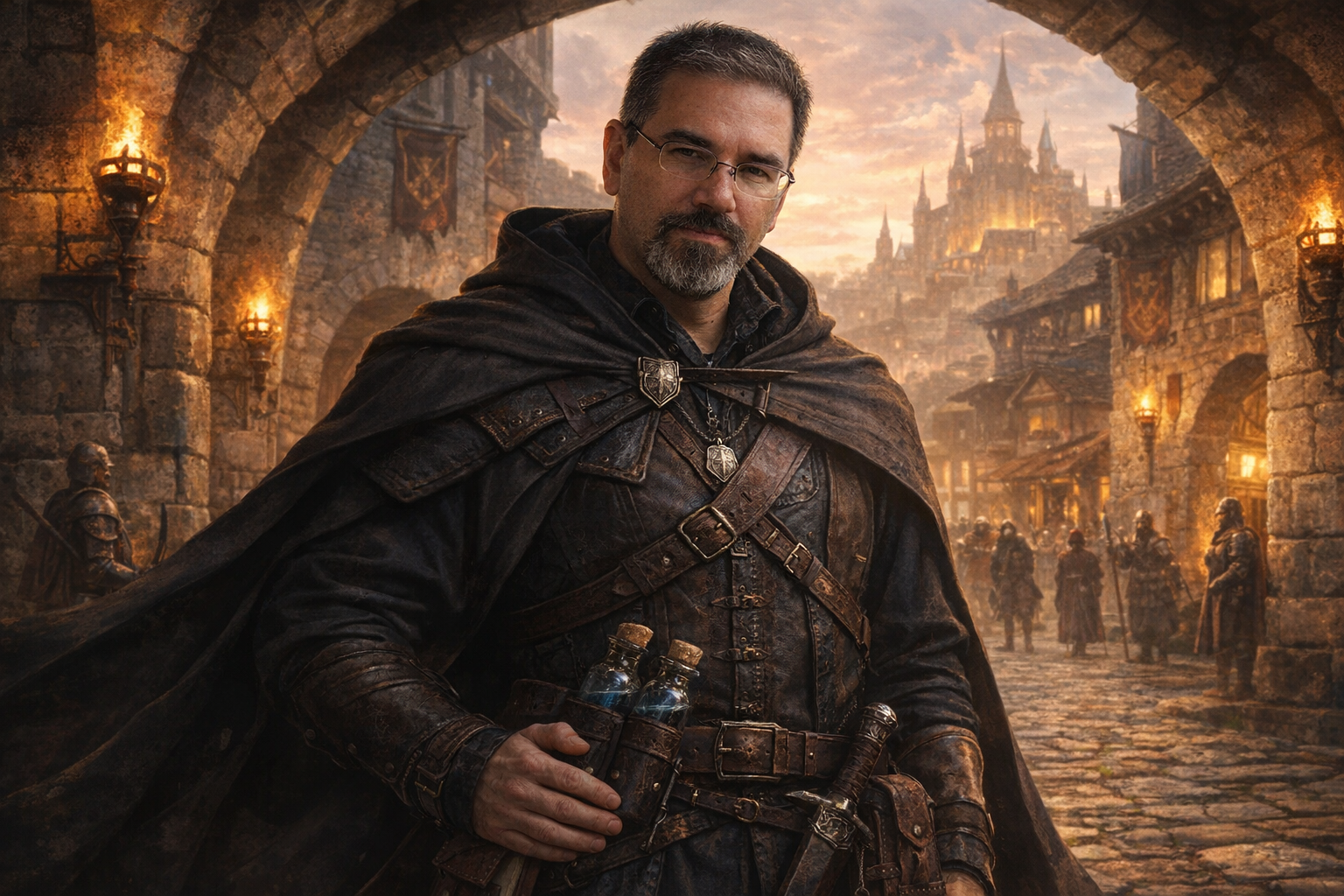
When I build a form, I no longer see text inputs and buttons. I see the gates of a city.
On one side stands a traveler. On the other side stands my application. Between them is a portcullis made of HTML, guarded by validation rules, warded by server logic, and lit by the flickering torches of user feedback. If I design it poorly, the traveler turns away. If I design it carelessly, something darker slips through.
Forms are not paperwork. They are the social contract of the web. They are where trust is negotiated.
And in my experience, trust is the most powerful magic in any system.
The Gatehouse: Structure Before Sorcery
Before any JavaScript enchantments or server side rituals, I start with structure. Plain, semantic HTML. Strong beams. Proper hinges. Clear signage.
<form action="/join-guild" method="POST" novalidate>
  <div>
    <label for="adventurerName">Adventurer Name</label>
    <input
      type="text"
      id="adventurerName"
      name="adventurerName"
      required
      minlength="3"
      aria-describedby="nameHelp"
    />
    <small id="nameHelp">
      Must be at least 3 characters long.
    </small>
  </div>

  <div>
    <label for="email">Messenger Owl Address</label>
    <input
      type="email"
      id="email"
      name="email"
      required
    />
  </div>

  <div>
    <label for="passphrase">Secret Passphrase</label>
    <input
      type="password"
      id="passphrase"
      name="passphrase"
      required
      minlength="8"
    />
  </div>

  <button type="submit">Join the Guild</button>
</form>
Every label is bound to its input. Every field has a purpose. The browser itself becomes my first sentry, enforcing required fields and minimum lengths.
In tabletop terms, this is Session Zero. Expectations are set. Rules are clear. No one is surprised when the dragon breathes fire because we agreed how fire works.
When structure is clean, users feel oriented. And orientation is the first step toward trust.
The Rogue at the Door: Client Side Validation
Client side validation is my rogue checking for traps before the party storms the hallway. It catches the obvious issues. It keeps the flow smooth. It prevents embarrassment before it reaches the throne room.
const form = document.querySelector("form");

form.addEventListener("submit", (event) => {
  const name = document.getElementById("adventurerName");
  const passphrase = document.getElementById("passphrase");

  let valid = true;

  if (name.value.length < 3) {
    showError(name, "Your name must be at least 3 characters.");
    valid = false;
  }

  if (passphrase.value.length < 8) {
    showError(passphrase, "Your passphrase must be at least 8 characters.");
    valid = false;
  }

  if (!valid) {
    event.preventDefault();
  }
});

function showError(input, message) {
  let error = input.nextElementSibling;

  if (!error || !error.classList.contains("error")) {
    error = document.createElement("div");
    error.classList.add("error");
    input.parentNode.appendChild(error);
  }

  error.textContent = message;
}
Notice what I am not doing. I am not scolding the player. I am not flashing a massive red banner that screams FAILURE as if they just rolled a natural one in front of the whole tavern.
Instead, I guide them. Calmly. Specifically.
“You need three characters.”
“Your passphrase needs eight.”
In Dungeons and Dragons, a good Dungeon Master does not punish curiosity. They redirect it. They describe the locked door and hint at the key. Good validation does the same.
The Castle Wall: Server Side Authority
But here is the truth every seasoned developer eventually learns.
Anything that happens in the browser can be bypassed.
If client side validation is the rogue, server side validation is the castle wall. It does not assume goodwill. It verifies.
In a Node and Express environment, my route might look like this:
app.post("/join-guild", (req, res) => {
  const { adventurerName, email, passphrase } = req.body;

  if (!adventurerName || adventurerName.length < 3) {
    return res.status(400).json({
      error: "Name must be at least 3 characters."
    });
  }

  const emailRegex = /^[^\s@]+@[^\s@]+\.[^\s@]+$/;

  if (!emailRegex.test(email)) {
    return res.status(400).json({
      error: "Messenger owl address is invalid."
    });
  }

  if (!passphrase || passphrase.length < 8) {
    return res.status(400).json({
      error: "Passphrase must be at least 8 characters."
    });
  }

  res.status(200).json({
    message: "Welcome to the guild."
  });
});
Here, the server trusts nothing blindly. Not even its own form.
In a campaign, if a player hands me a character sheet with suspiciously high stats, I do not accept it without checking the rolls. Not because I distrust the player, but because the integrity of the world depends on consistency.
The same is true of applications. Trust is built not by naivety, but by verification.
Warding Circles: Sanitization and Defense
Validation checks whether data fits the rules. Sanitization ensures that data cannot corrupt the realm.
If I render raw user input directly into HTML, I risk cross site scripting attacks. That is the equivalent of inviting a bard into the castle and discovering they are actually a shape shifted demon.
So I escape output before rendering:
const escape = require("escape-html");

app.post("/leave-message", (req, res) => {
  const rawMessage = req.body.message;
  const safeMessage = escape(rawMessage);

  // Store safeMessage safely
  res.send("Your message has been recorded in the archives.");
});
This is the magical ward inscribed around the throne room. It does not prevent visitors. It prevents corruption.
Security is invisible when done well. And invisibility, in this case, is a virtue.
The Voice of the Dungeon Master: Feedback
One of the most overlooked aspects of forms is feedback after submission.
Did the spell succeed?
Did the door open?
Did the guild accept the oath?
form.addEventListener("submit", async (event) => {
  event.preventDefault();

  const button = form.querySelector("button");
  button.disabled = true;
  button.textContent = "Consulting the Guild Masters...";

  try {
    const response = await fetch("/join-guild", {
      method: "POST",
      body: new FormData(form)
    });

    if (!response.ok) {
      throw new Error("The ritual failed.");
    }

    form.innerHTML = "<p>You are now a member of the guild.</p>";
  } catch (error) {
    button.disabled = false;
    button.textContent = "Join the Guild";
    alert("The ritual was interrupted. Please try again.");
  }
});
Silence after submission is like a Dungeon Master staring blankly after a dice roll. It creates doubt. Was the action acknowledged? Did anything happen?
Clear loading states and responses narrate the moment. They reassure the player that the world is responsive.
Responsiveness breeds trust.
Accessibility: Every Adventurer Matters
Not every player approaches the table the same way. Some rely on screen readers. Some navigate by keyboard. Some use older devices. If my form only works for the fastest broadband wizard with a glowing gaming rig, I have excluded half the party.
Proper labels. Logical tab order. Clear focus states.
These are not optional side quests. They are core mechanics.
If someone using a screen reader cannot understand my form, then I have built a dungeon with invisible walls and unannounced traps. That is not challenging. That is unfair.
And unfair systems do not earn trust.
The Emotional Contract
Over time, I have realized that forms are emotional interfaces.
When someone fills out a job application, they are offering hope.
When someone enters payment information, they are offering vulnerability.
When someone signs up for an account, they are offering identity.
If my validation is confusing, if my errors are harsh, if my security is weak, I am mishandling something personal.
In Dungeons and Dragons, players trust the DM with their characters. Their backstories. Their risks. That trust is fragile. Once broken, it is nearly impossible to restore.
On the web, it is the same.
Forms are not glamorous. They do not earn applause like a perfectly animated hero section. But they are where the real story begins. They are the oath at the guild hall. The contract with the crown. The handshake before the quest.
When I build a form now, I imagine a torch lit gate at dusk. A traveler approaches. They hesitate.
My job is to make that hesitation disappear.
Clear structure.
Kind validation.
Strong security.
Honest feedback.
When I get those right, the gates open smoothly. The traveler steps inside. The adventure begins.
And no one has to roll a saving throw against distrust.